Rose Cocktails

Gandhi Vatika Museum

smirnof - white

Gandhi Vatika Museum. Jaipur, Rajasthan

Project Overview
Client
Jaipur Development Authority, Government of Rajasthan
Experience Strategy & Museum Design
Lokusdesign

The Gandhi Vatika Museum in Jaipur was envisioned as a contemporary cultural institution dedicated to interpreting the life, philosophy, and enduring legacy of Mahatma Gandhi. Located in Central Park, Jaipur, the museum aims to create a deeply reflective visitor experience that engages audiences with Gandhi’s ideas, moral philosophy, and the larger ideals that shaped India’s freedom movement.


Unlike traditional history museums that rely primarily on chronological storytelling, the Gandhi Vatika Museum was conceived as a philosophy-led experiential journey. The intent was not merely to narrate historical events, but to create a space where visitors can engage with the values and ethical principles that defined Gandhi’s life and leadership.


Lokusdesign was entrusted with developing the experience narrative, spatial storytelling framework, exhibition design and executing the project, transforming Gandhi’s philosophy into a powerful and immersive museum experience.


The Challenge

Designing a museum around one of the most studied figures in modern history presented a unique set of challenges.

Moving Beyond Historical Chronology


Many museums about Gandhiji focus primarily on documenting the events of the Indian freedom struggle. The ambition of the Gandhi Vatika Museum was to move beyond chronology and present Gandhiji as a moral thinker, social reformer, and global philosopher whose ideas continue to shape modern society.


Translating Philosophy into Experience


Gandhiji’s legacy is rooted in abstract yet powerful ideas such as truth, non-violence, ethical self-discipline, and collective welfare. The challenge was to translate these philosophical ideas into tangible spatial experiences that visitors could understand emotionally and intellectually.

Creating Relevance for Contemporary Audiences

For younger generations, especially, Gandhiji’s ideas must be experienced not as distant history but as living principles that address contemporary global challenges, including peace, social justice, sustainability, and ethical leadership.

Engaging Diverse Visitors


The museum was designed to engage a wide range of audiences:

• students and young learners
• families and tourists
• scholars and historians
• international visitors exploring India’s intellectual heritage

The design, therefore, needed to balance intellectual depth with accessibility and experiential engagement.

Lokusdesign’s Strategic Approach

Lokusdesign approached the project through a values-driven storytelling framework, positioning Gandhi not only as a historical leader but as a philosopher of ethical action and social transformation. Rather than following a strictly chronological timeline, the visitor journey is structured around the evolution of Gandhi’s ideas and their impact on society.

This framework transforms the museum from a historical archive into a reflective space that invites visitors to engage with Gandhi’s philosophy in their own lives.

Design Framework

Lokusdesign structured the museum experience through thematic zones that collectively interpret Gandhi’s life, ideas, and global influence.

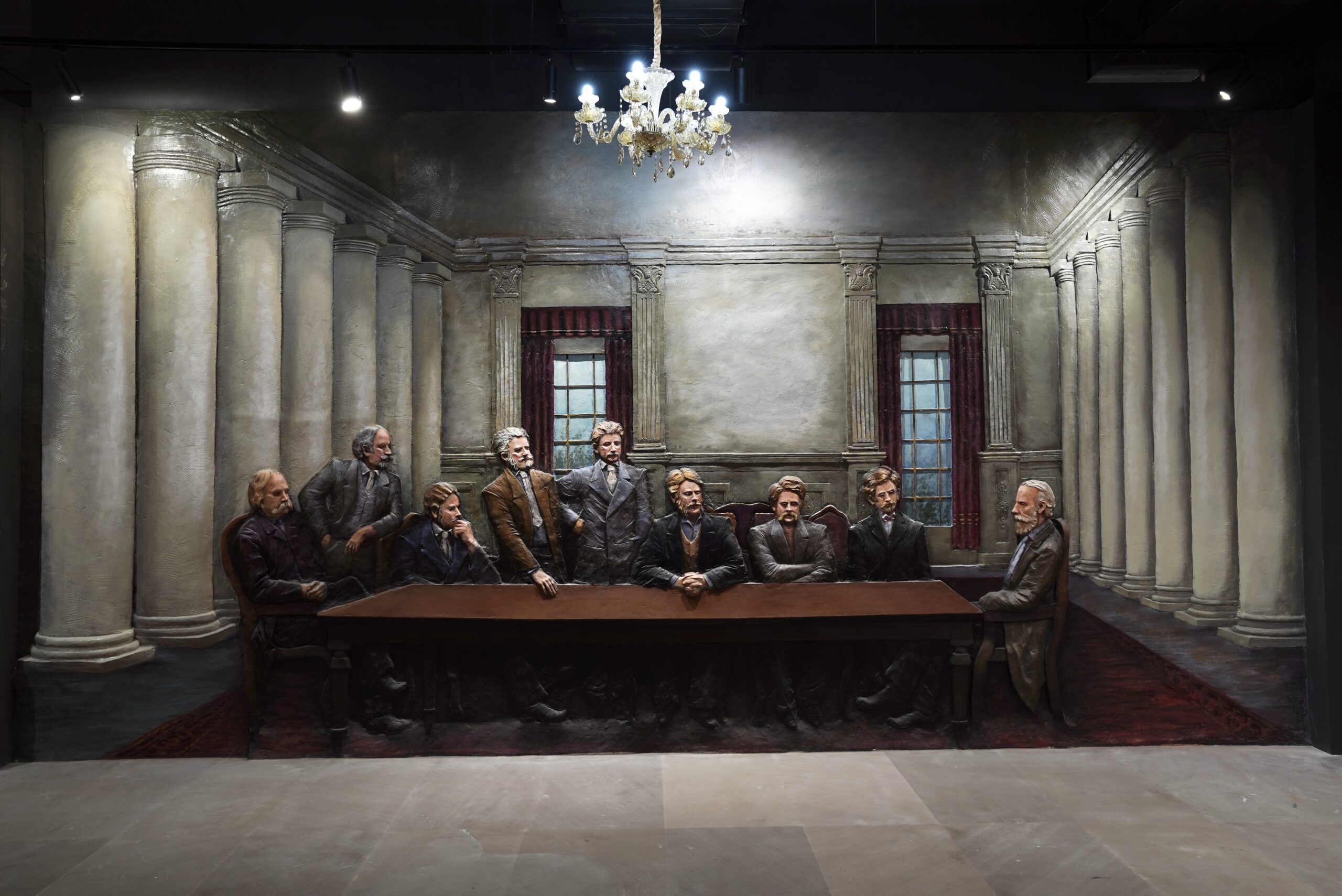
Context: India Under Colonial Rule

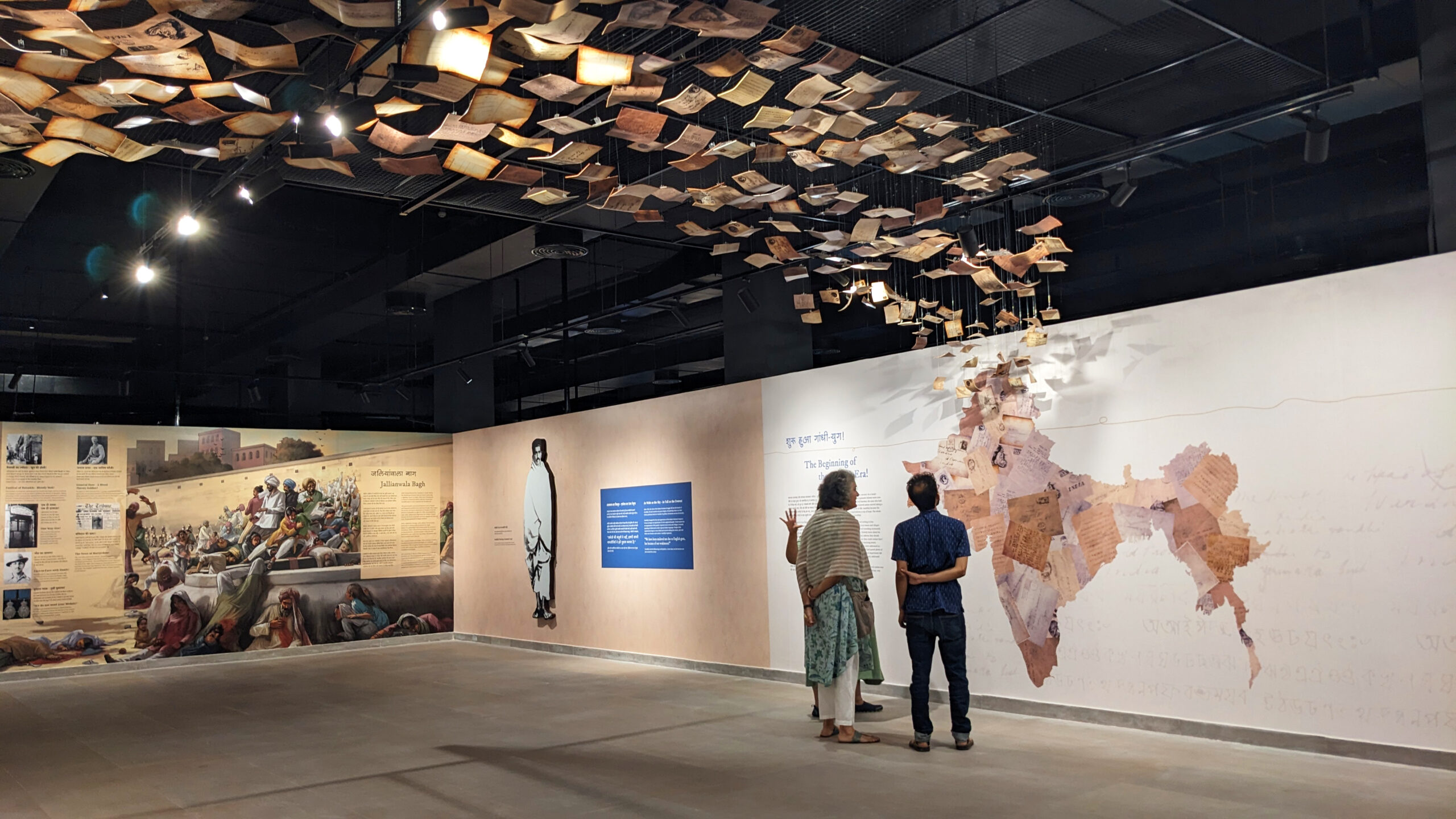
The opening galleries establish the social and political landscape of colonial India.

Visitors explore:

• colonial policies and economic exploitation
• early resistance movements
• the emergence of national consciousness
• the conditions that shaped the freedom struggle.

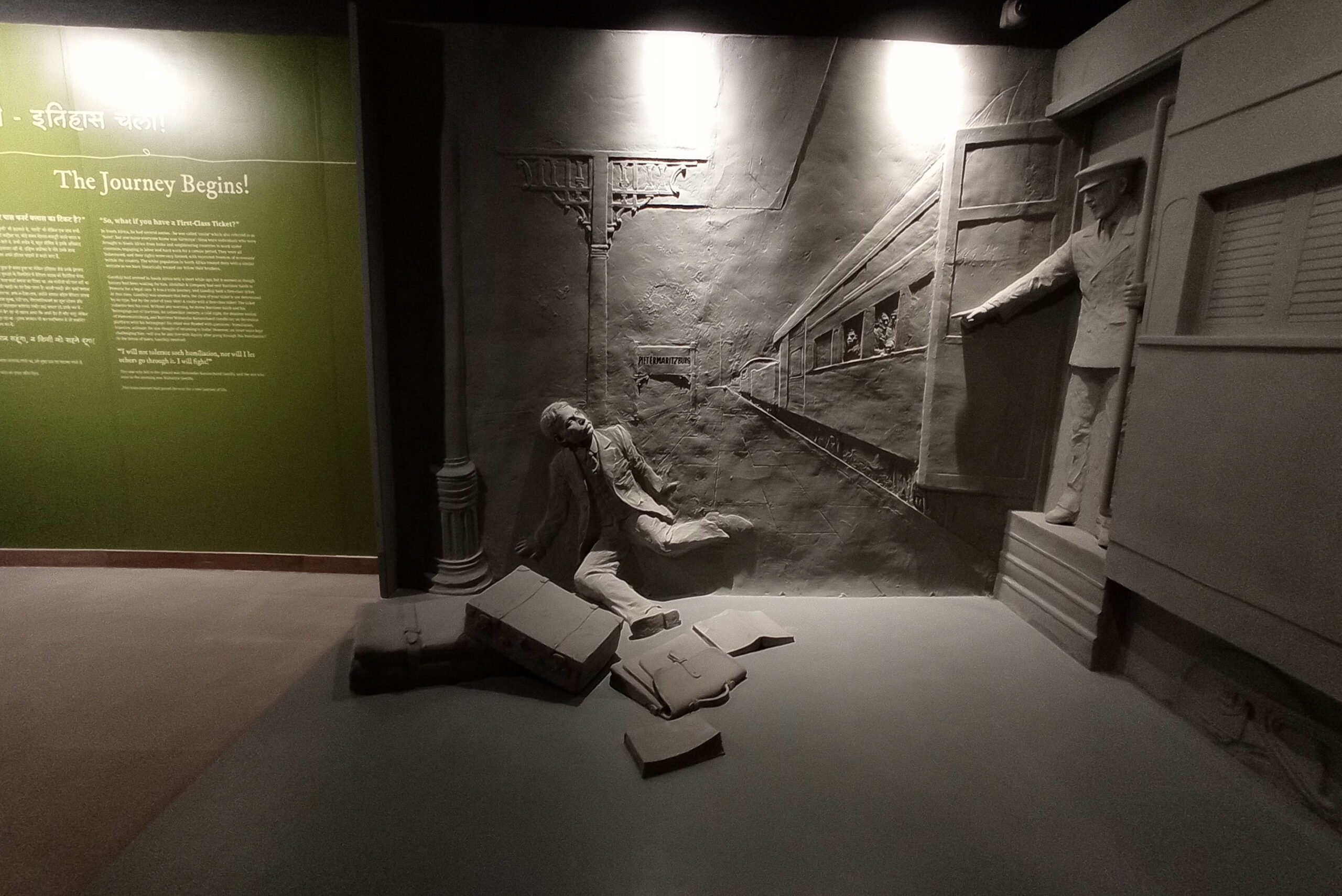
The Making of Gandhi

This section traces the formative experiences that shaped Gandhiji’s worldview.

Key narratives include:

• childhood influences and early education
• his years in London
• his transformative experiences in South Africa
• the birth of the philosophy of Satyagraha.

The Path of Satyagraha

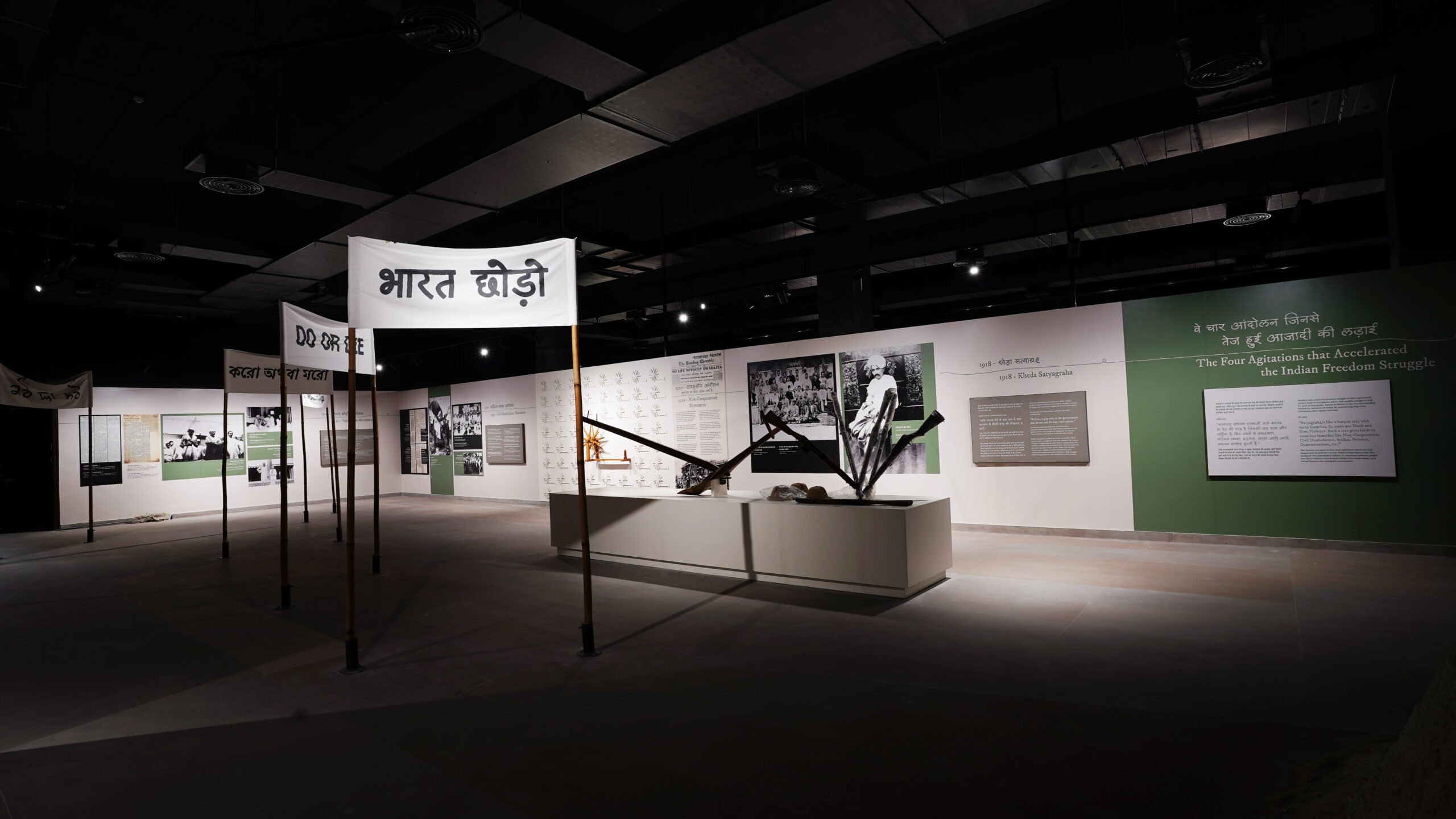
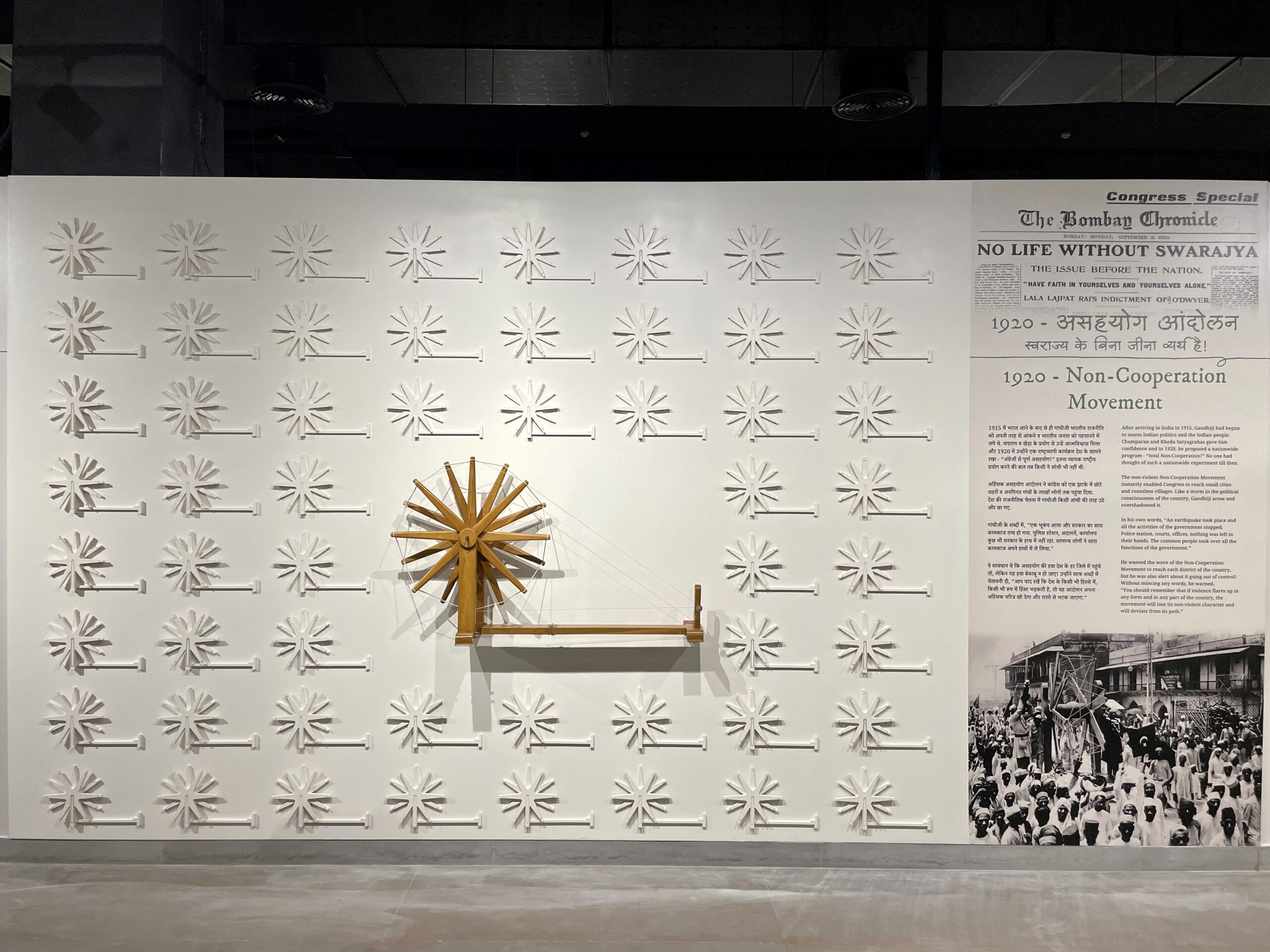
This gallery explores Gandhiji’s philosophy of non-violent resistance and its application in India’s freedom struggle. Through immersive storytelling, visitors experience how Gandhiji transformed political resistance into a moral and ethical movement.

Key movements highlighted include:

• Champaran Satyagraha
• Non-Cooperation Movement
• Civil Disobedience Movement
• Salt March and mass mobilisation.

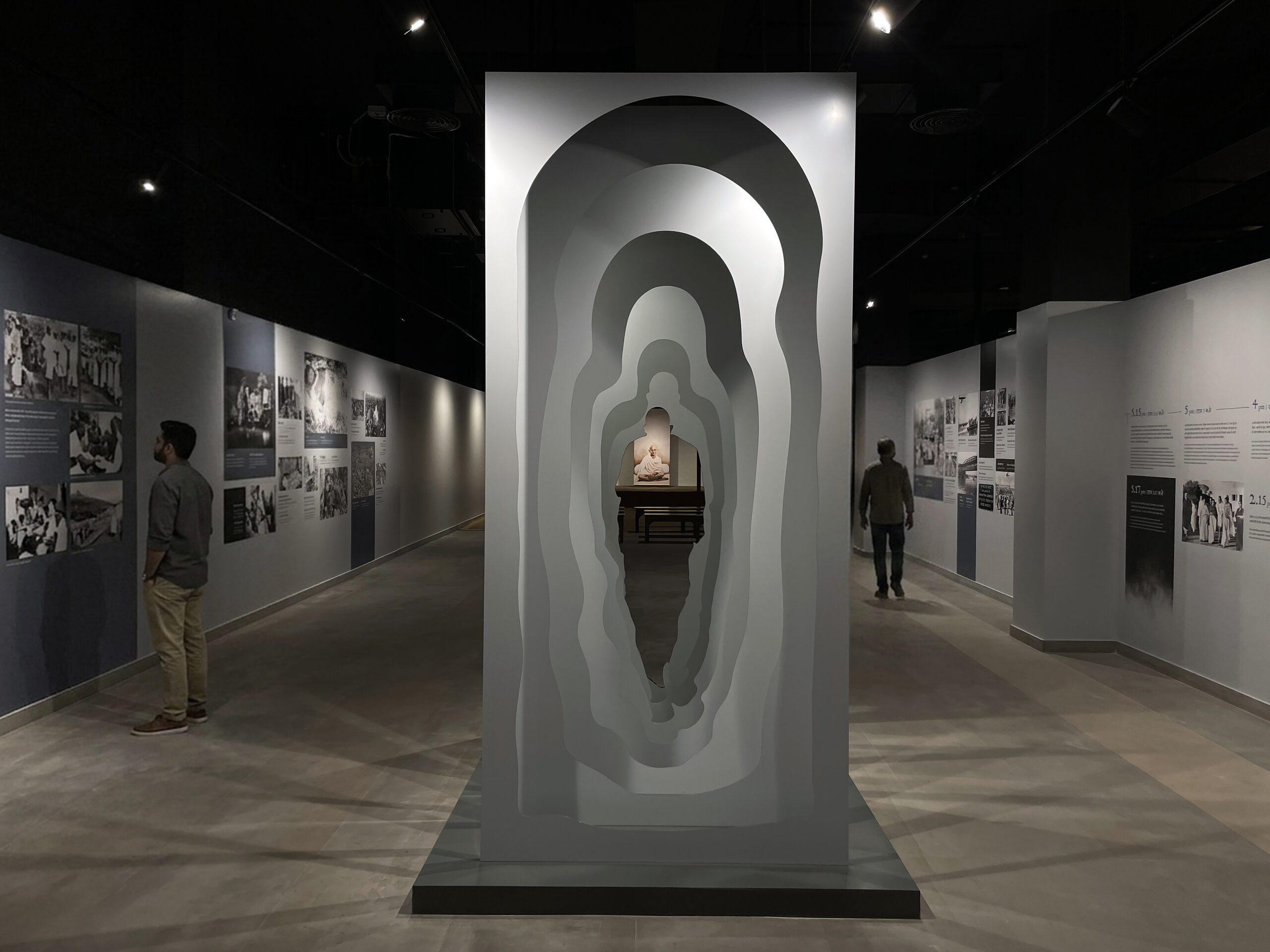
The Inner Journey

Beyond politics, Gandhiji’s life was also a profound journey of self-transformation.

This section explores:

• the practice of Satya (truth)
• Ahimsa (non-violence)
• simplicity and self-discipline
• introspection and moral courage.

Gandhi and Rajasthan

A dedicated gallery explores Gandhiji’s relationship with Rajasthan and the contributions of regional leaders inspired by his ideas.

Visitors discover:

• Gandhiji’s visits to Rajasthan
• regional participation in the freedom movement
• local leaders influenced by Gandhian philosophy.

The Garden of Ideas

This experiential zone interprets the philosophical foundations of Gandhian thought.

Themes include:

• Swaraj – self-rule and individual responsibility
• Sarvodaya – welfare of all
• community living and sustainability
• ethical economics and trusteeship
• harmony and peaceful coexistence.

Global Legacy

The concluding galleries celebrate Gandhiji’s influence worldwide.

Visitors explore:

• global leaders inspired by Gandhiji
• non-violent movements around the world
• artistic, literary, and cultural representations of Gandhiji
• the continuing relevance of Gandhian philosophy.

Experience Design

To bring Gandhiji’s ideas to life, Lokusdesign integrated a range of immersive exhibition techniques. These elements transform the museum into an experiential narrative environment where visitors engage with history, philosophy, and ideas simultaneously.

Interpretive Media

• scenographic installations and immersive multimedia projections
• narrative dioramas, and artefact displays with contextual storytelling
• interactive digital exhibits
• ambient soundscapes and oral narratives

Spatial Experience

The spatial design carefully choreographs the visitor’s emotional journey.

The experience progresses from:

awareness → reflection → inspiration

Architectural volumes, lighting, and scenography guide visitors through moments of learning, introspection, and contemplation, making the museum both an educational and reflective space.

Impact

Rather than functioning as a traditional historical archive, the museum becomes a space for moral inquiry and civic reflection.

Turn Complexity into
Competitive Advantage.