After four decades of shaping India’s rural economy, NABARD was entering a new phase of institutional transformation. Its Pragati vision represented a broader, more technology-enabled and future-facing organisation – with an expanding mandate, diverse stakeholder ecosystem and increasingly complex communication requirements.
The visible brief was to transform the brand.
The hidden business brief was:
How could NABARD translate a new organisational ambition into one coherent brand experience – across a large, distributed organisation with multiple internal stakeholders, programmes, audiences and channels?
The challenge was therefore to:
• Translate Pragati from organisational strategy into a simple, compelling brand proposition.
• Align diverse internal stakeholders around a common brand language.
• Create coherence across multiple initiatives, regions, and communication platforms.
• Modernise NABARD without diluting four decades of institutional trust.
• Build a system that could scale as the organisation, its programmes and stakeholder ecosystem evolved.
Lokusdesign went beyond the visible identity brief to decode the organisational and business problem behind it.
We mapped NABARD’s strategic intent, stakeholder ecosystem, internal structures and communication touchpoints to identify the common platform that could connect to a complex institution.
We distilled this into three strategic ideas:
TRANSFORMATION → CATALYST → PROSPERITY
These became the foundation for a unified brand architecture and a contemporary identity system.
We then translated the strategy across:
Brand Strategy → Architecture → Identity → Communication → Experience
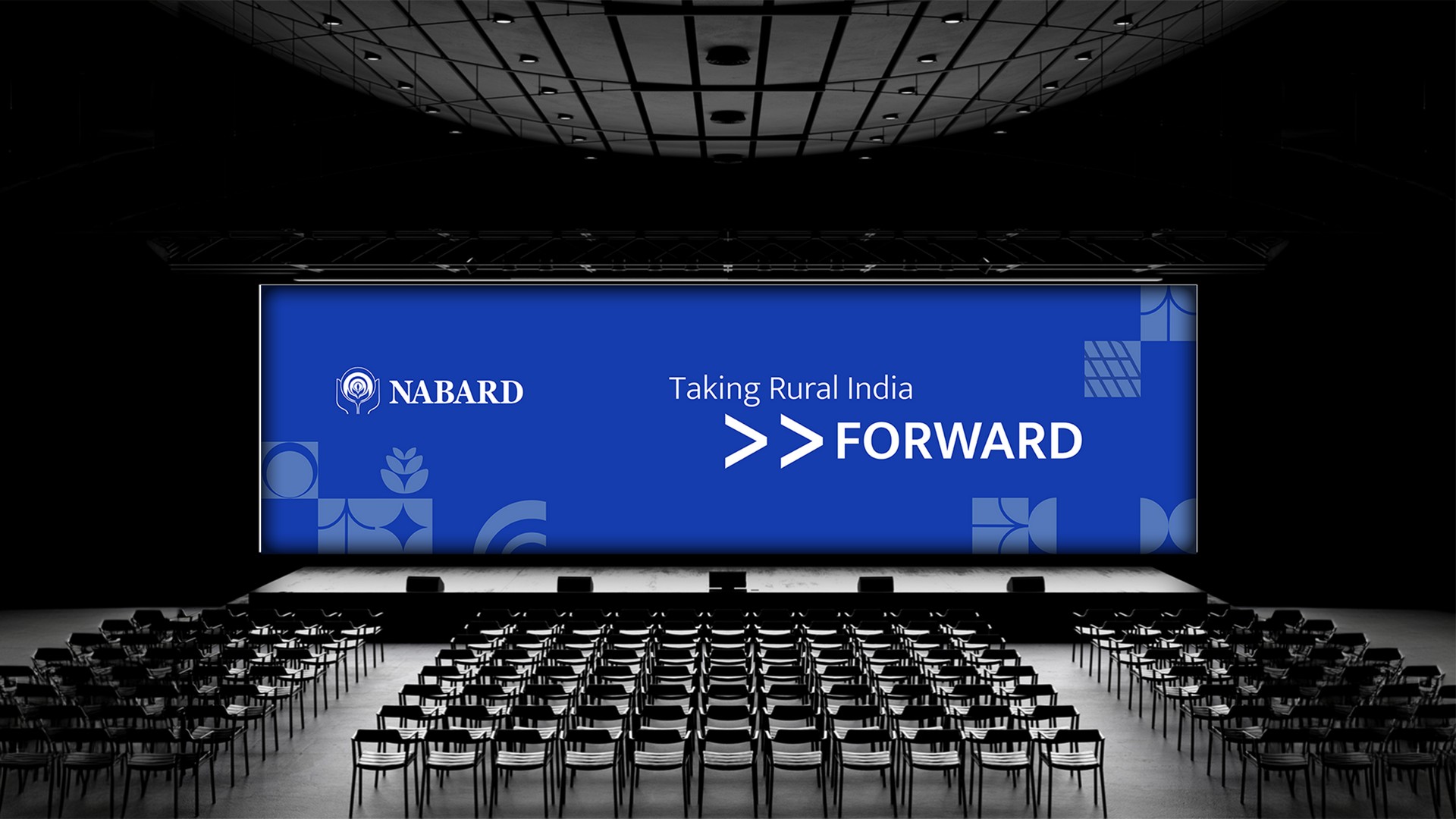
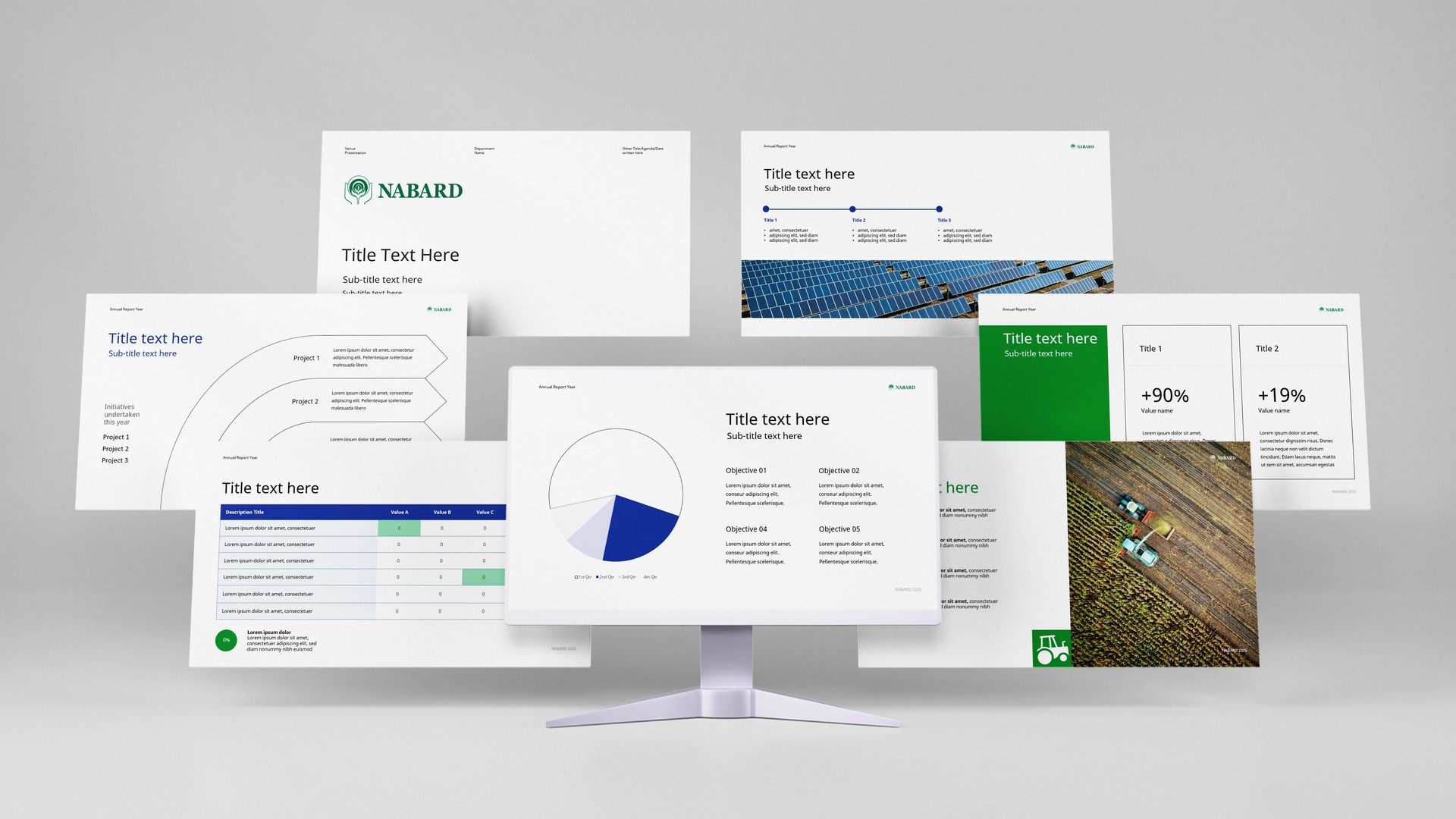
The critical intervention was not the identity alone, but the system behind it – creating common principles and reusable design and communication assets that could work across Head Office, Regional Offices, programmes, publications, digital platforms, events, signage and stakeholder communication.
BUSINESS ECONOMICS
CAC / Engagement ↓
Clearer proposition → easier understanding → lower communication friction → more efficient stakeholder engagement.
CapEx ↓
Reusable brand and experience assets → less reinvention → greater return on brand investment.
OpEx ↓
Standardised systems → faster deployment → lower dependence on bespoke development → lower implementation effort.
Scale ↑
Stable brand core + flexible expression → new programmes, channels and markets without fragmenting the master brand.
Lokusdesign transformed the assignment from a brand redesign into an organisational brand transformation.
Pragati Vision → Strategic Clarity → Stakeholder Alignment → Unified Brand → Scalable Communication System
The result was more than a contemporary NABARD identity.
It created the brand infrastructure for a transforming NABARD, connecting organisational ambition, internal alignment, and stakeholder experience through one scalable system.
Lokusdesign did not simply redesign how NABARD looked. We designed how a complex institution could express, align, and scale its transformation.