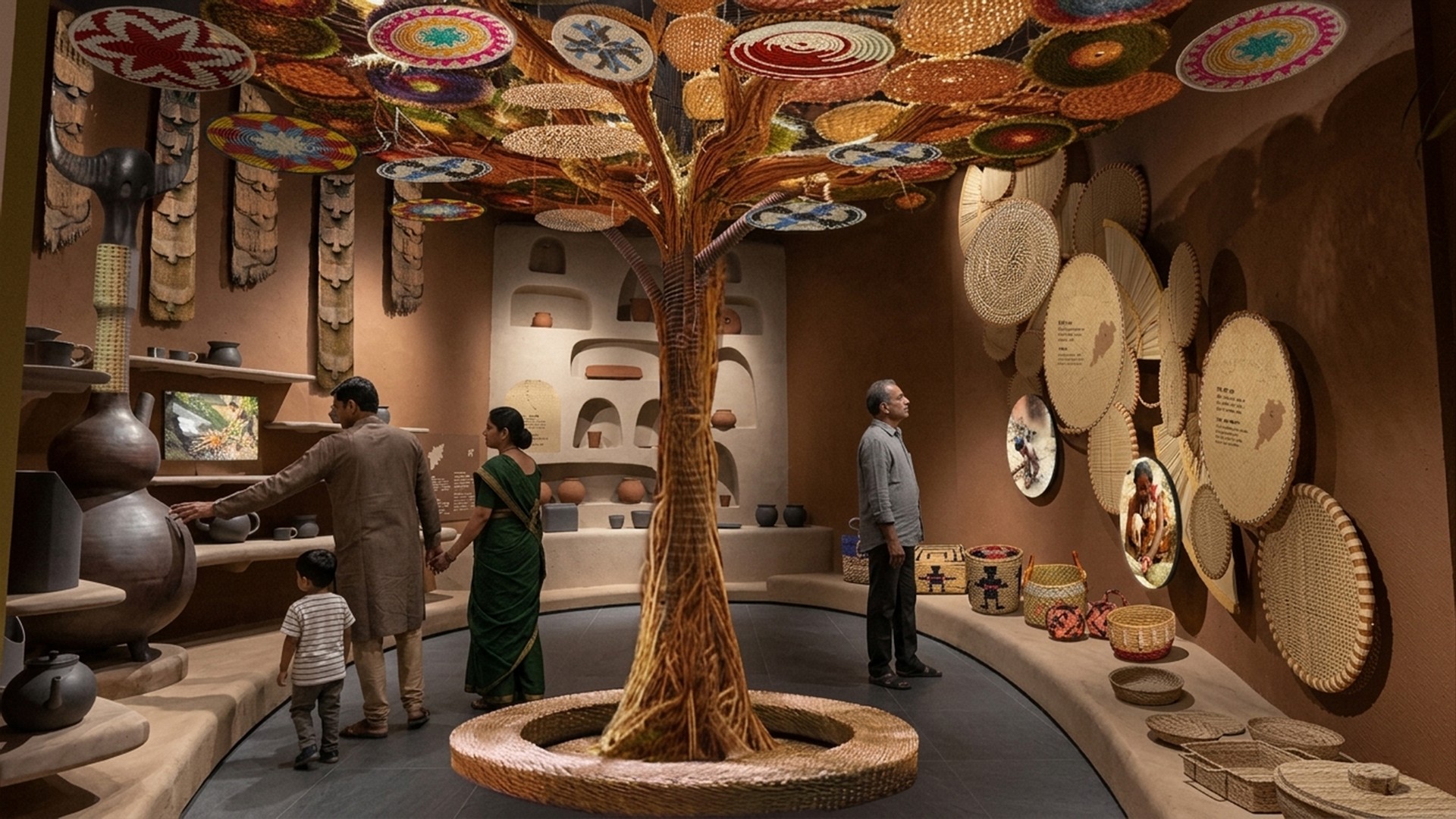
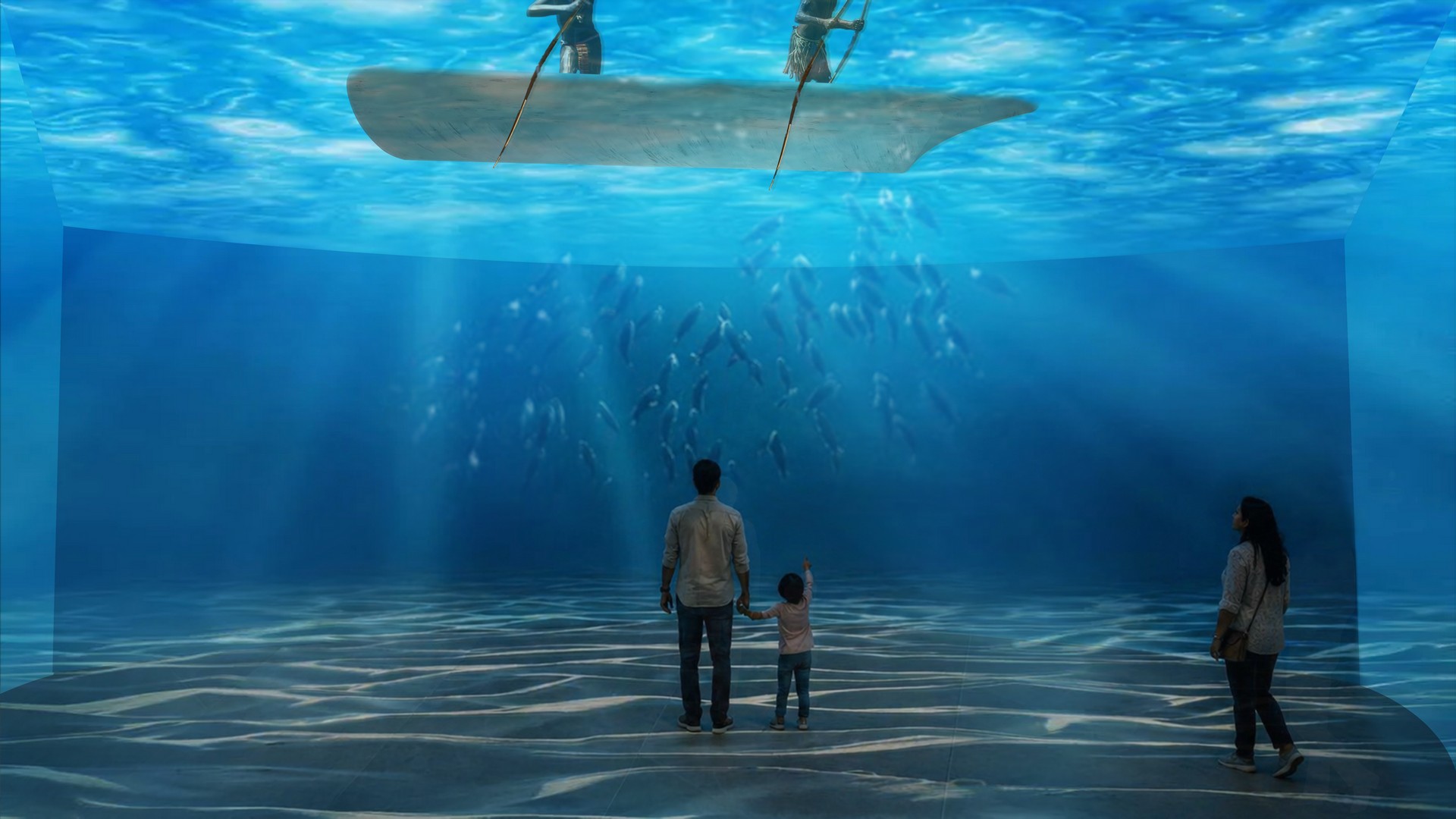
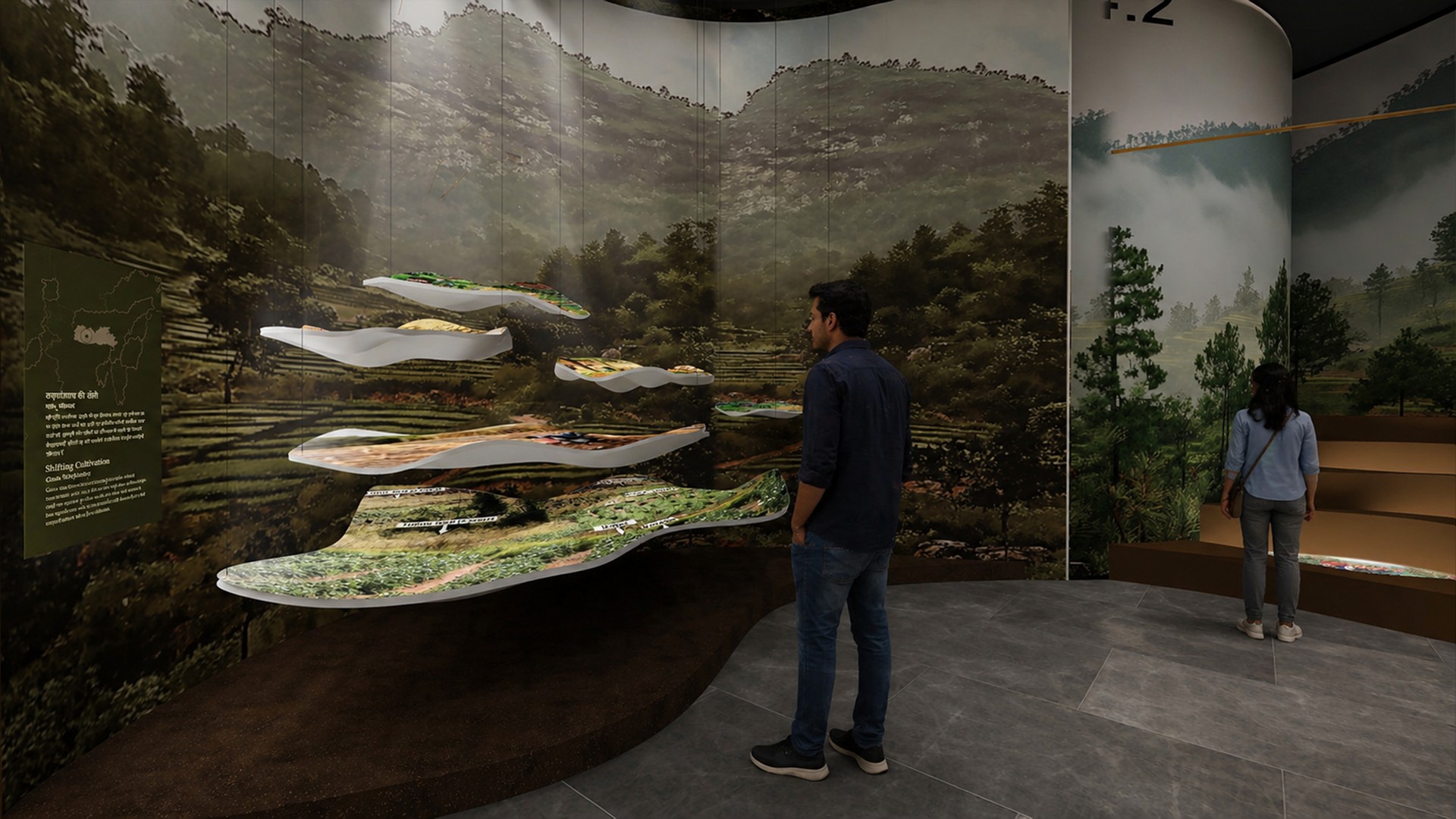
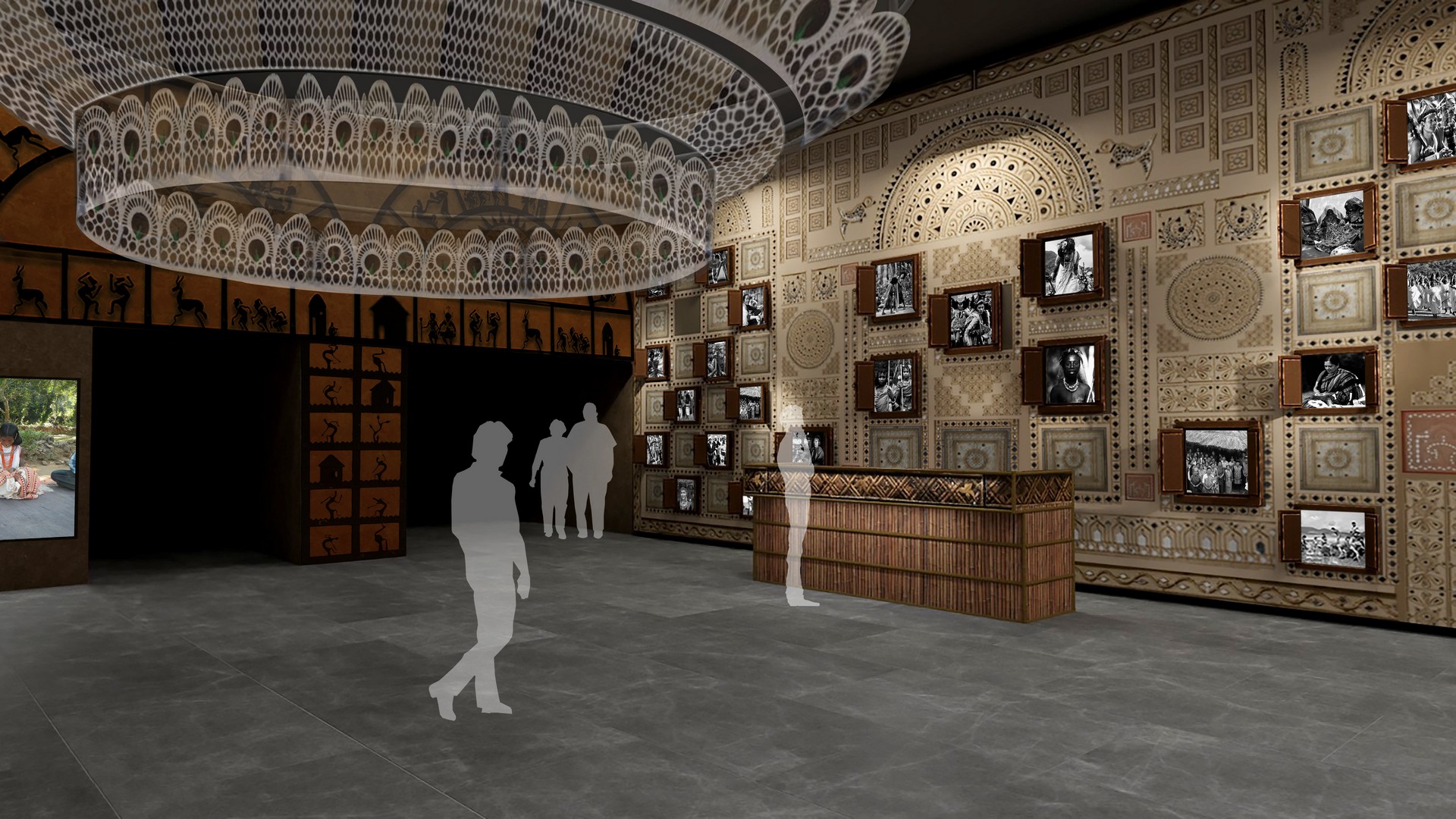
Representing the diversity of India’s tribal communities required balancing multiple narratives while maintaining a cohesive visitor experience. The challenge was to move beyond traditional artefact-based displays and create an immersive environment that could communicate not only tangible heritage but also oral traditions, rituals, folklore, ecological knowledge, and community practices. Ensuring cultural authenticity and sensitivity while making these stories accessible and engaging for contemporary audiences was central to the project.
Lokusdesign adopted a research-driven, narrative-led approach that presents tribal culture as an interconnected system shaped by nature, community, tradition, and identity. The museum experience unfolds through a series of immersive thematic environments exploring the relationship between tribal communities and their landscapes, cultural practices, artistic traditions, everyday life, and historical journeys. Rather than observing artefacts in isolation, visitors encounter tribal heritage through recreated environments, contextual storytelling, interactive exhibits, multimedia installations, and live demonstrations that bring cultural narratives to life.
By integrating immersive exhibition techniques, experiential environments, and interpretive storytelling, Lokusdesign created a museum that serves as both a cultural archive and a platform for dialogue. The result is a landmark destination that celebrates tribal heritage, amplifies indigenous knowledge systems, and fosters deeper public understanding of the communities that have shaped India’s cultural landscape for generations.