Raymond’s combo-pack business – pre-matched shirting and trousering fabric – had built a strong market position, but growth remained sluggish. Product differentiation and promotional interventions were delivering limited impact, while purchase decisions continued to be driven largely by brand and price.
The visible brief was to grow the combo-pack business.
The hidden business brief was more fundamental:
How could Raymond make a mature fabric category relevant again when consumers were increasingly moving towards the convenience, variety and immediacy of ready-to-wear?
The business faced several interconnected barriers:
• A mature category with declining relevance and changing consumption behaviour.
• Limited differentiation beyond brand and price.
• A strong association with gifting and special occasions, restricting purchase frequency.
• Friction around tailoring, stitching and alterations.
• A portfolio organised primarily around price rather than customer needs and contexts.
• A customer journey that created unnecessary friction between choosing fabric and becoming fashion ready.
Lokusdesign reframed the growth opportunity:
The opportunity was not to sell more fabric. It was to increase the value, relevance, and frequency of the fashion purchase.
That meant moving the business from:
Fabric → Fashion Solution
Gifting → Self-Consumption
Product Transaction → End-to-End Customer Journey
Lokusdesign redesigned the growth logic of the category – not just its packaging or communication.
We restructured the portfolio around: VALUE × PRICE × STYLE × CONTEXT
Instead of organising the business primarily around product and price, we mapped demand across real customer occasions and needs, including business casuals, formals, ethnic wear, gifting, milestones and seasons.
This revealed opportunities to rationalise and sharpen the portfolio from 50+ SKUs to 24, creating a more focused opportunity architecture and making the range easier for both customers and the business to navigate.
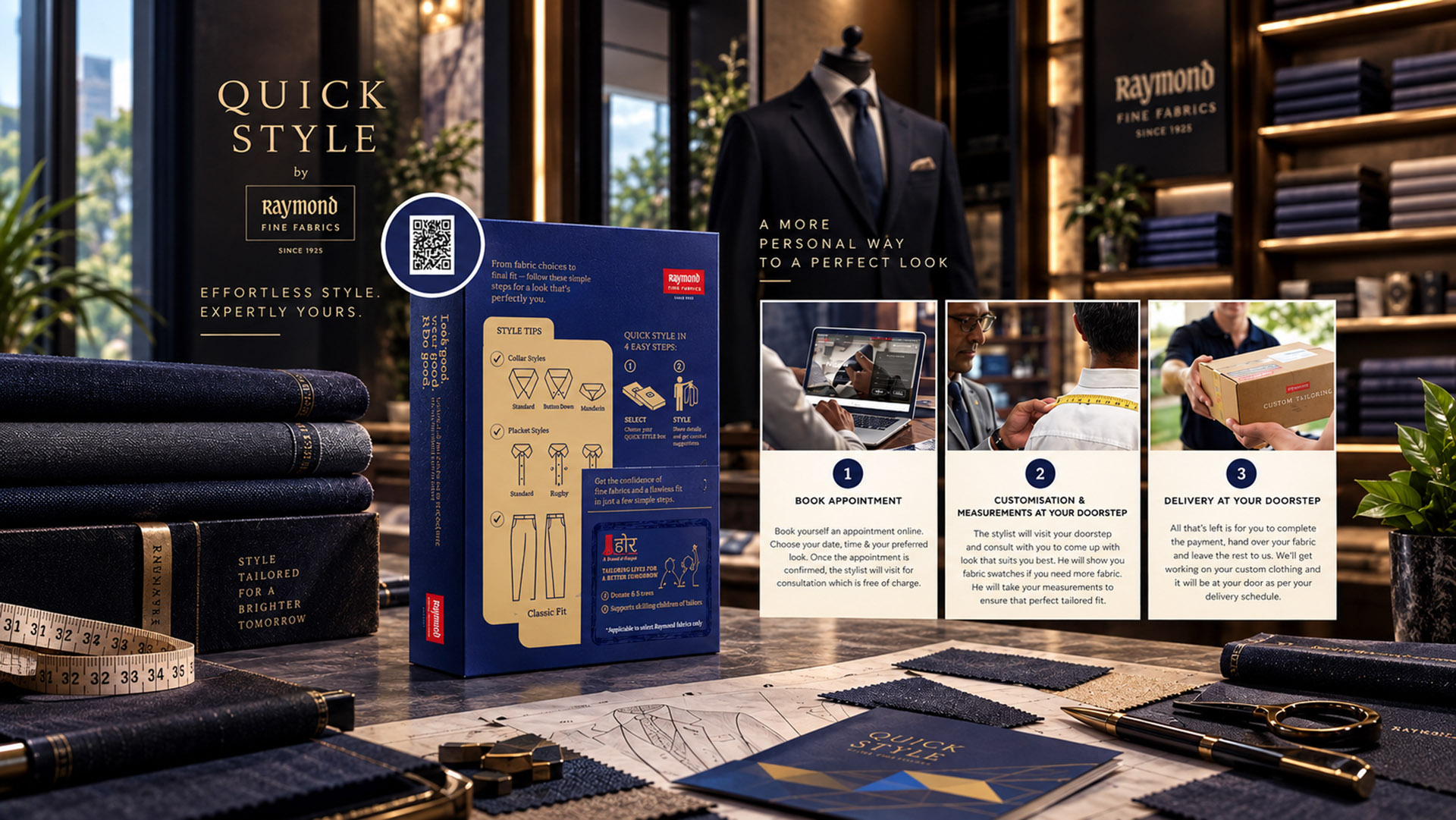
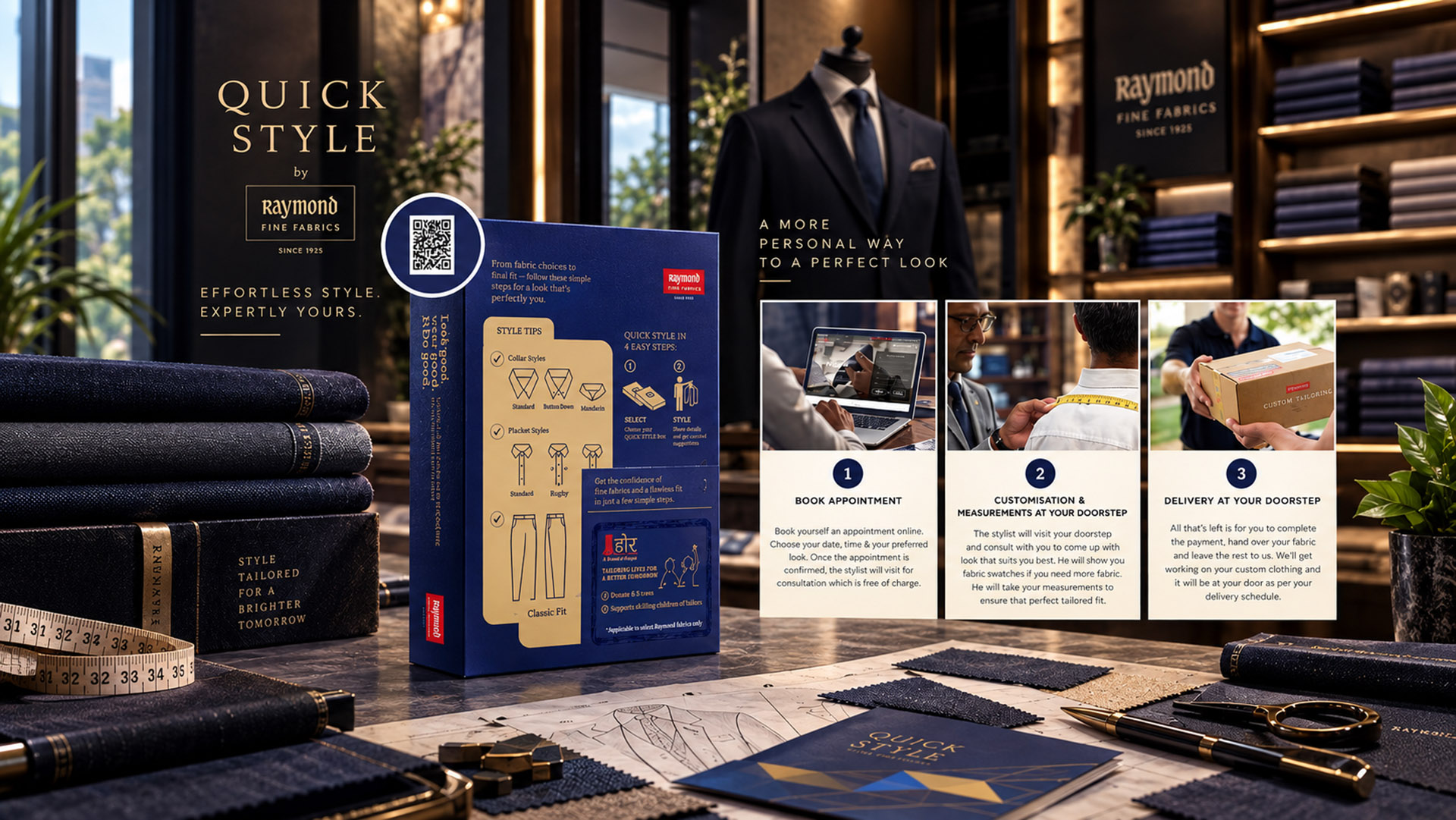
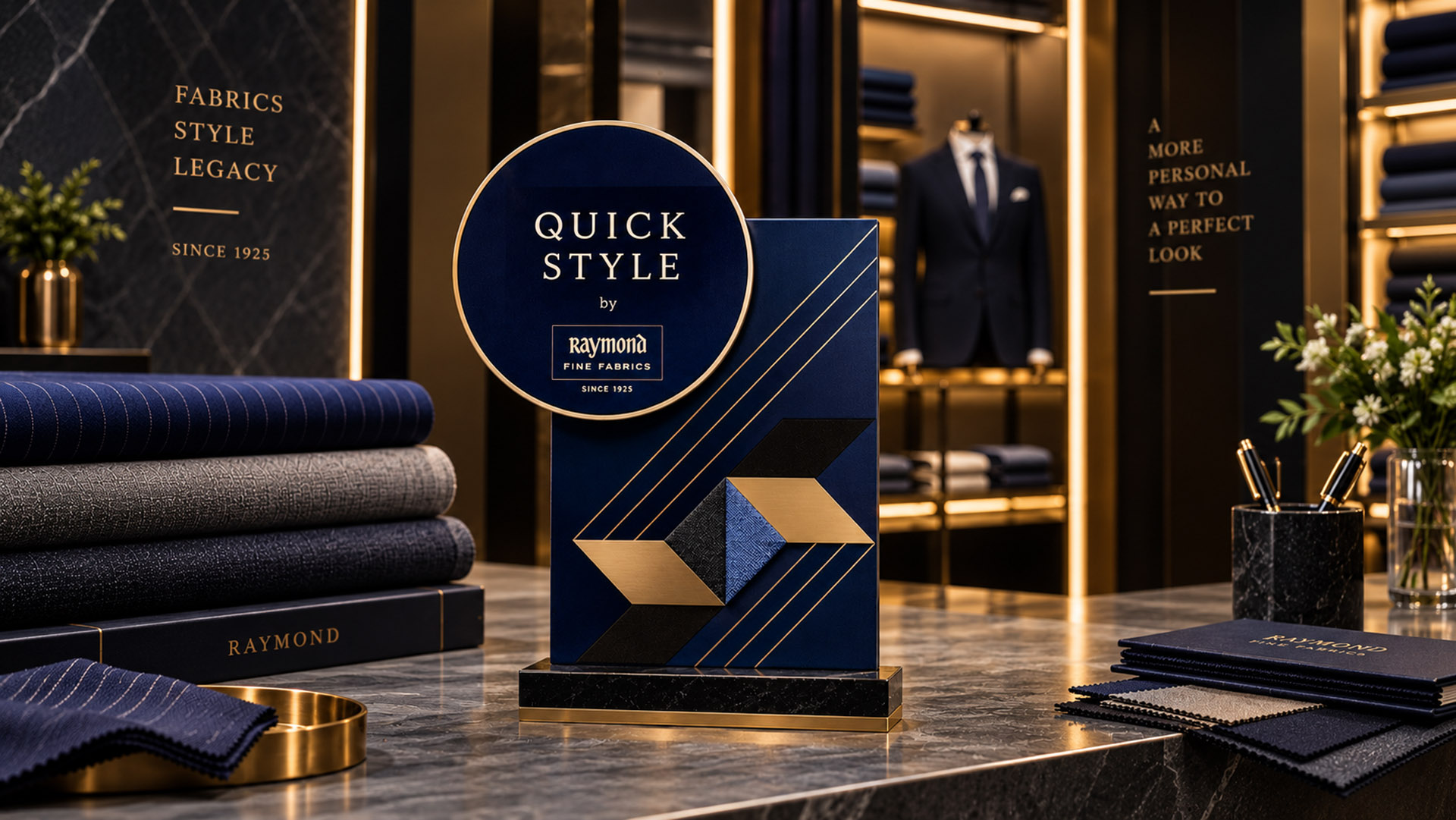
We then repositioned the proposition through Quick Style, shifting the category from a fabric purchase to a complete fashion solution, while Raymond Fine Fabrics retained the parent brand’s trust and credibility.
The strategy was carried through the entire customer journey:
Portfolio → Proposition → Naming → Packaging → Retail POSM → Communication → Purchase Experience
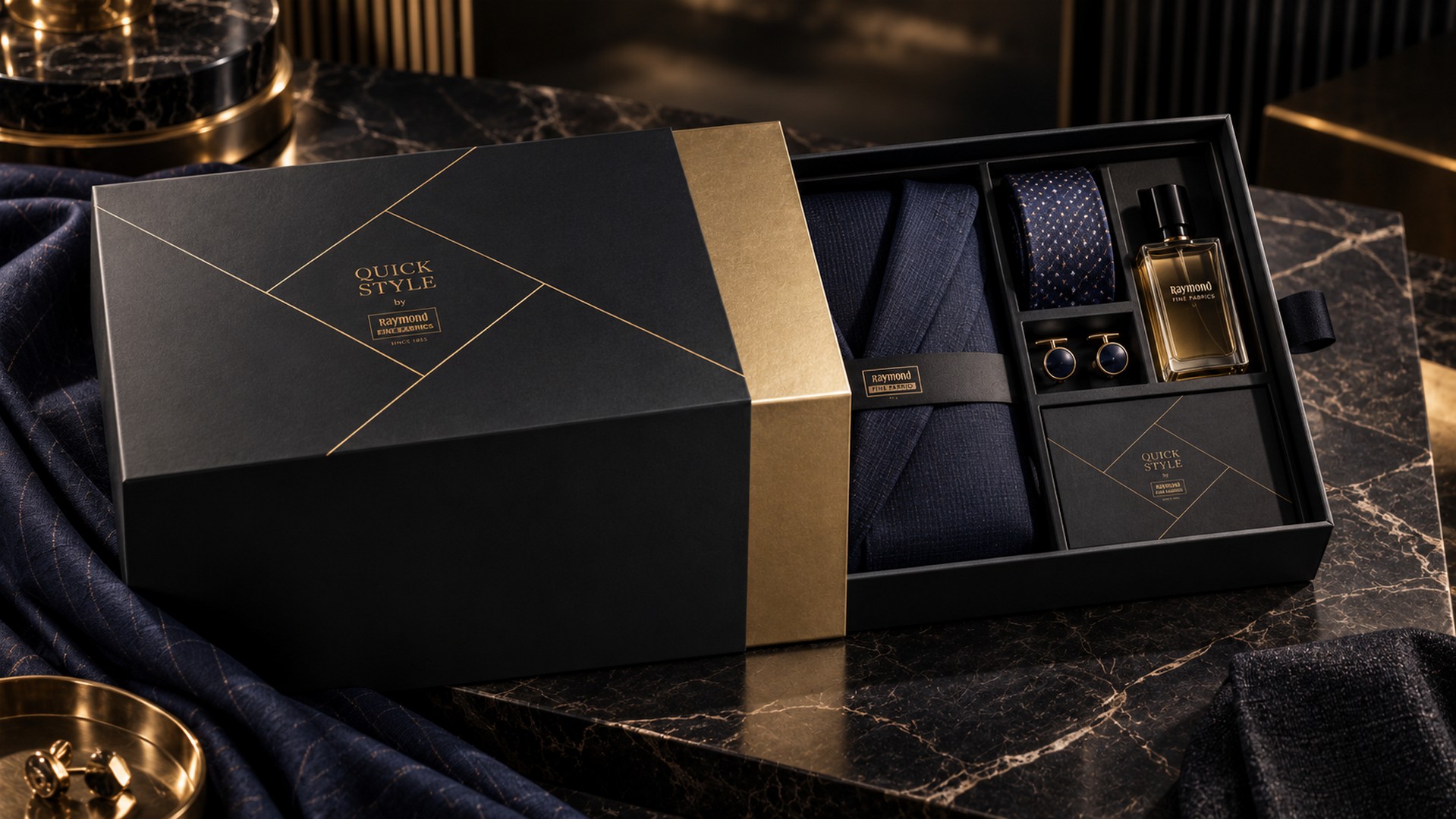
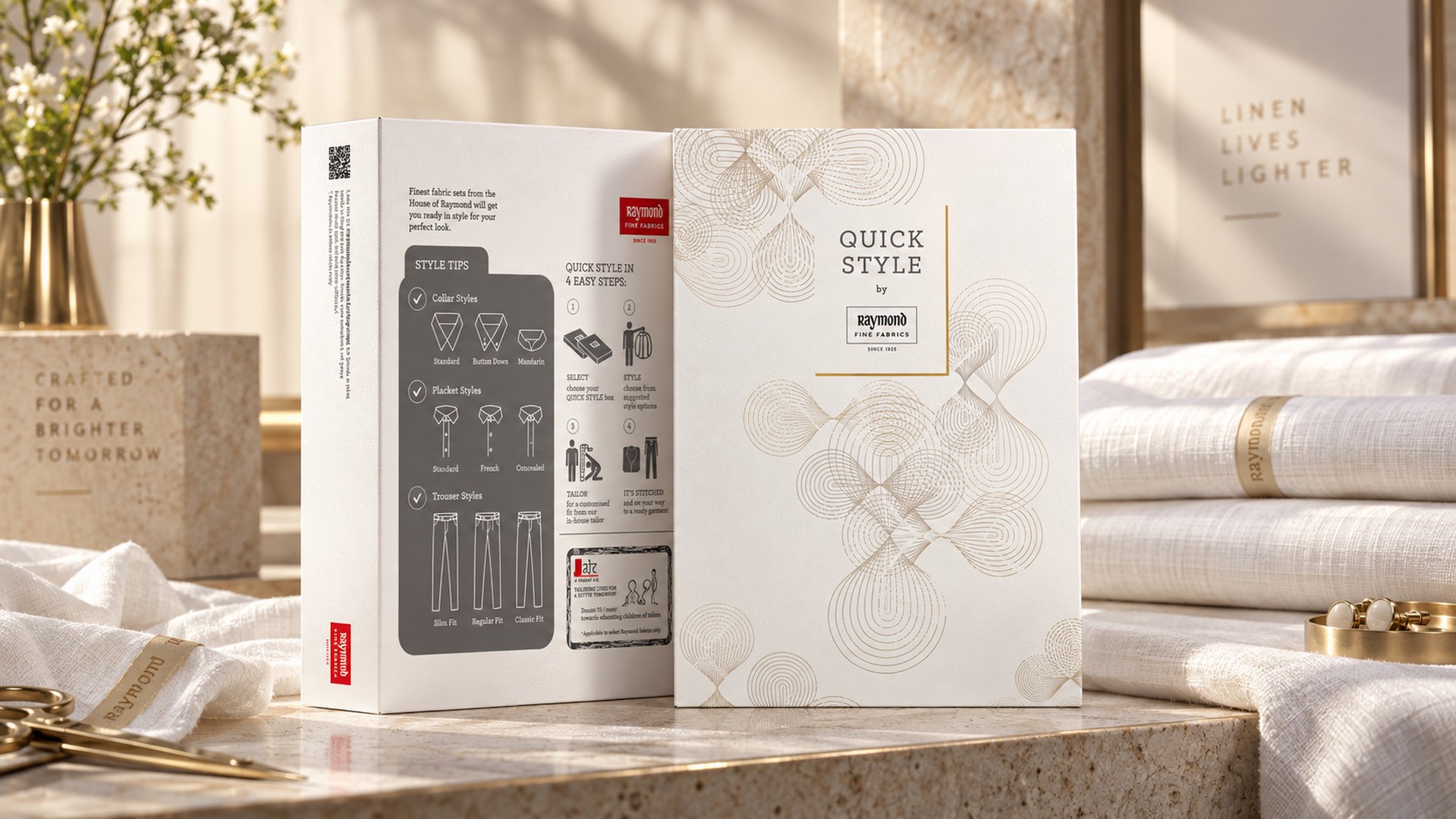
Packaging and retail were redesigned around clearer choice architecture, stronger value communication and reduced decision friction. The 24-SKU system integrated structure, naming, communication hierarchy, colour, materials and textures into one coherent experience. Prototypes were test-marketed before launching, allowing the system to be refined based on actual customer responses rather than relying solely on internal assumptions.
The economics of the transformation were embedded throughout:
CAC ↓
Sharper segmentation + clearer proposition + easier choice
→ greater relevance
→ stronger purchase confidence
→ more efficient customer conversion.
CapEx ↓
A rationalised 24-SKU architecture + modular packaging and retail system
→ less proliferation
→ more efficient design and implementation investment.
OpEx ↓
Simplified portfolio + clearer communication + reduced customer decision friction
→ easier retail execution
→ lower complexity across the customer and operating journey.
Scale ↑
An occasion-led architecture rather than a purely product-led range
→ more consumption contexts
→ greater opportunity for repeat purchase and category expansion.
The transformation changed not just how Raymond sold fabric, but why and when consumers bought it.
A Raymond-commissioned study in 2021 found that self-consumption increased from 12% before the transformation to 39% – a 27-percentage-point increase.
50+ SKUs → 24 SKUs
Gifting-led → Self-consumption ↑ from 12% to 39%
Fabric → Fashion Solution
Product Portfolio → Opportunity Architecture
The result was a shift from a mature, product-led category to a more relevant fashion-enablement proposition, supported by a clearer portfolio, stronger customer experience, and a scalable retail and packaging system.
Lokusdesign did not redesign a declining fabric category. We redesigned the growth logic around it – connecting business strategy, consumer behaviour, portfolio architecture, brand, retail and packaging into one system.