As entertainment moved from television to streaming, digital content and multiple screens, Dish TV saw an opportunity to move beyond traditional DTH and create a new proposition for the connected consumer.
The visible brief was to create a new brand. Lokusdesign reframed the opportunity around the business problem behind it: more content and more choice were making discovery and decision-making increasingly complex.
The opportunity was to create a brand that could simplify choice, drive preference, and give Dish TV a scalable platform for future entertainment offerings.
Lokusdesign took the proposition from business strategy through to a scalable brand system, integrating consumer decision-making and business economics at every stage.
We analysed the category, competitive landscape, changing consumption behaviour and future opportunity spaces to define a differentiated position for the new brand. We identified the core consumer tension – more choice, but greater difficulty in finding what is relevant – and built the proposition around making entertainment easier to discover, understand and choose.
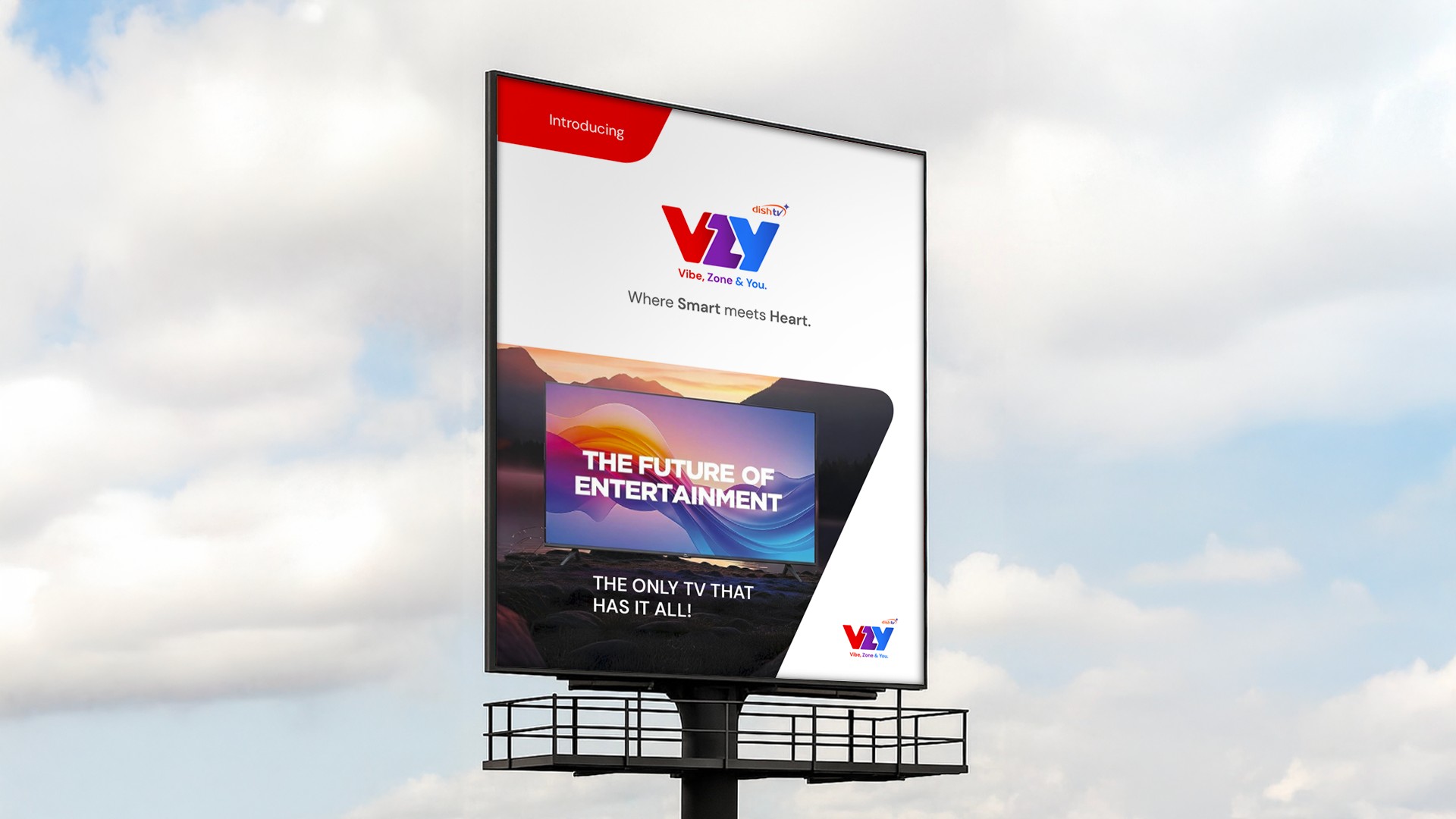
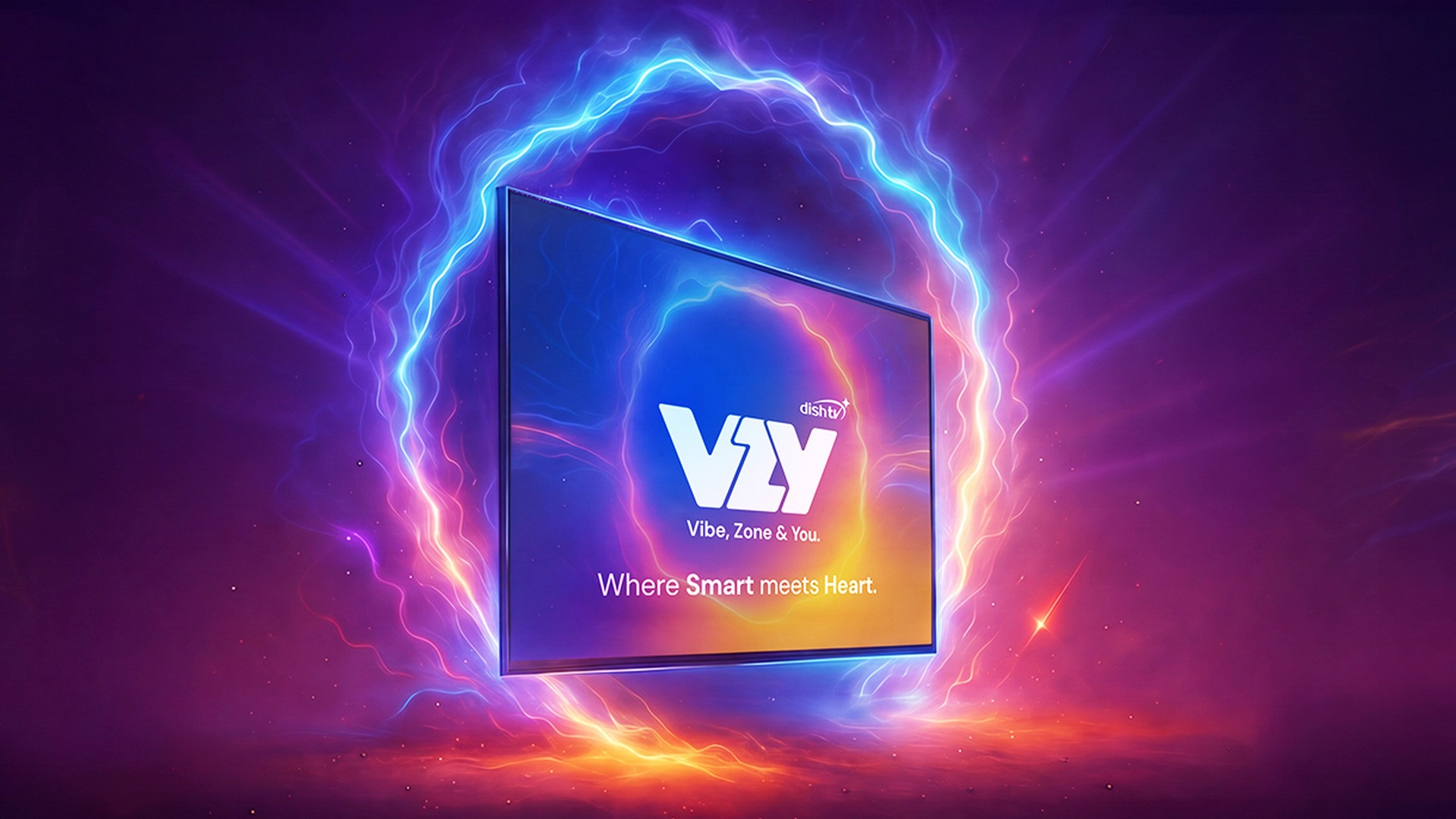
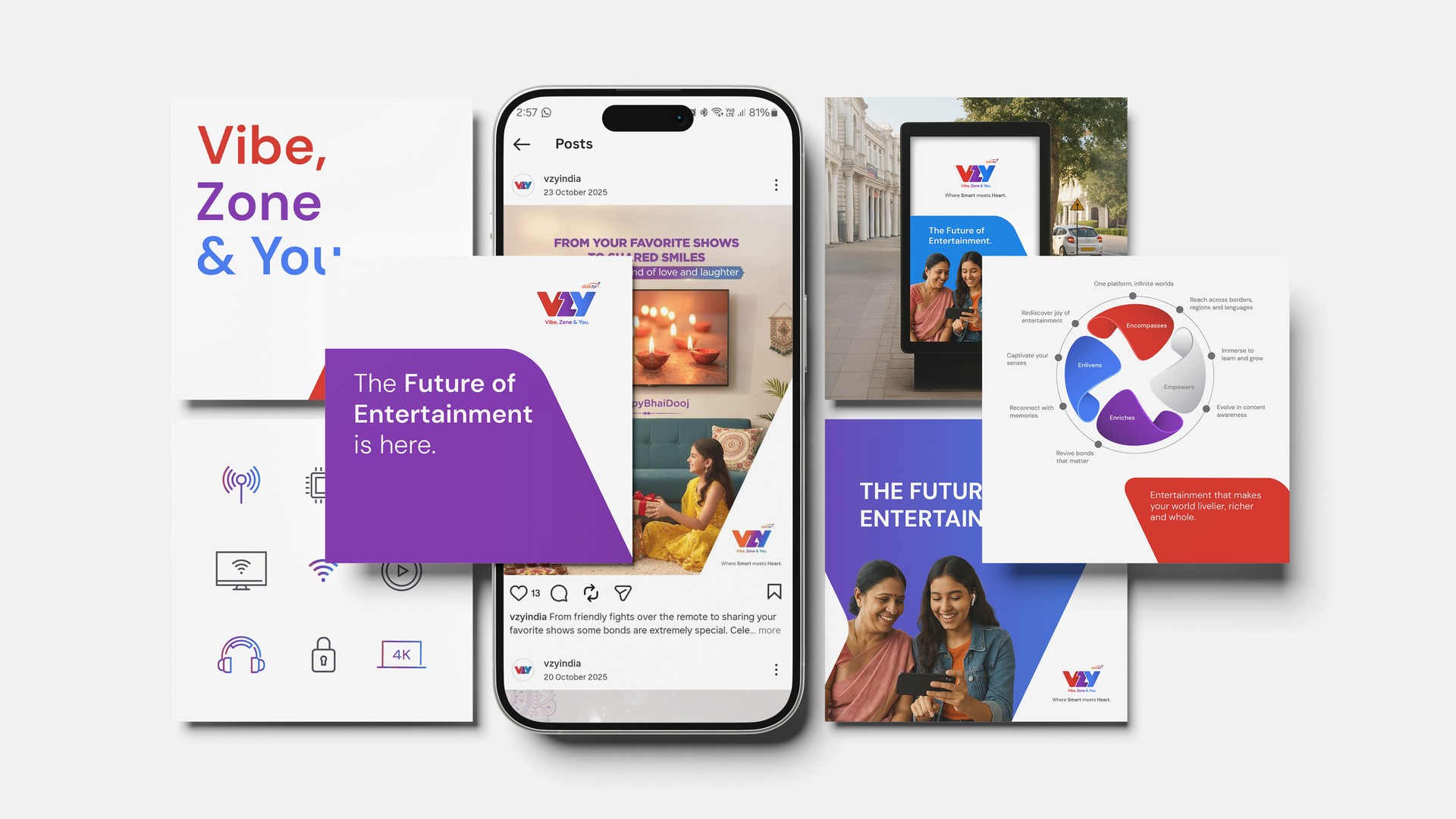
This led to VZY – an intelligent entertainment companion designed for effortless discovery and personalised entertainment.
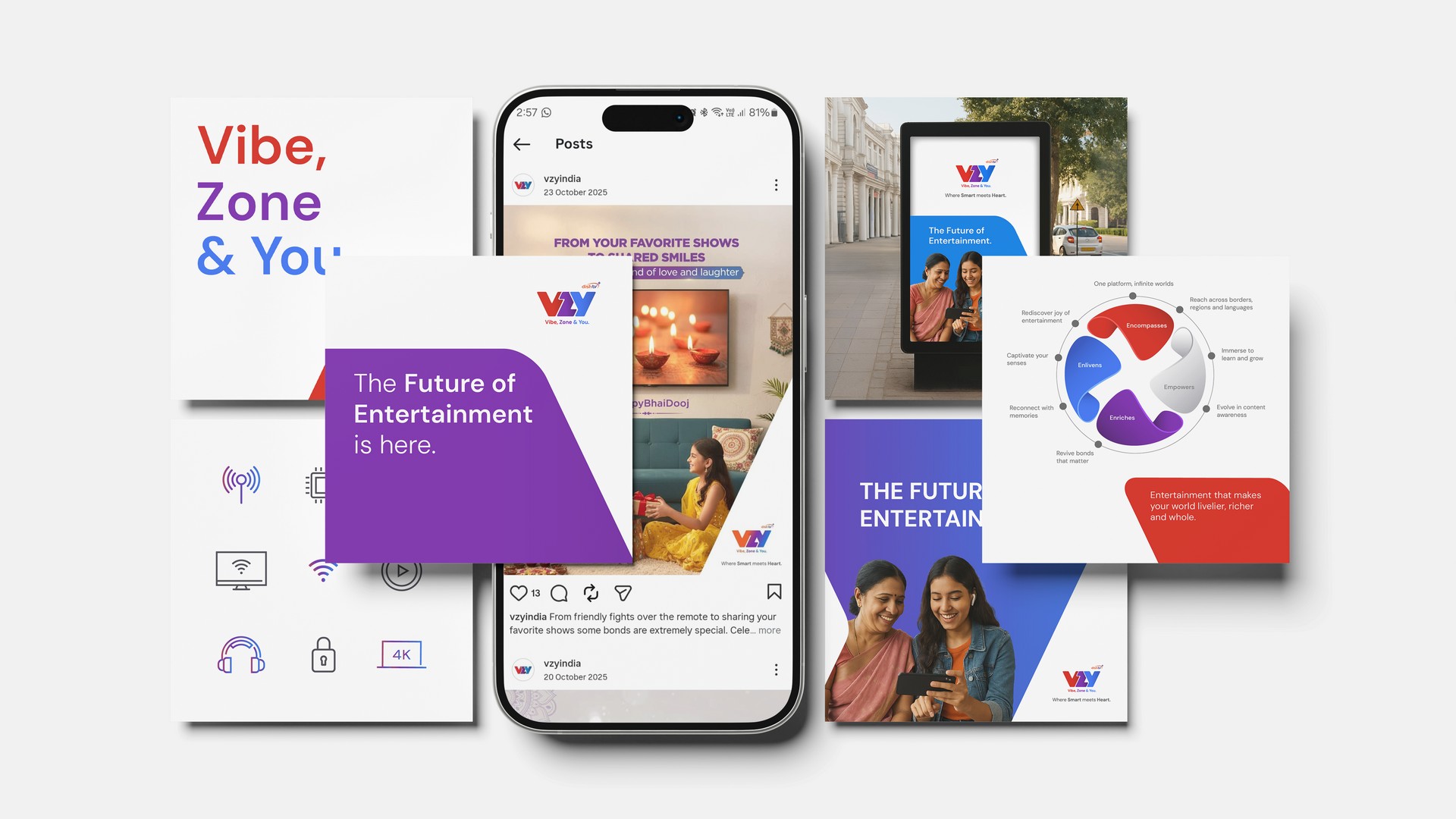
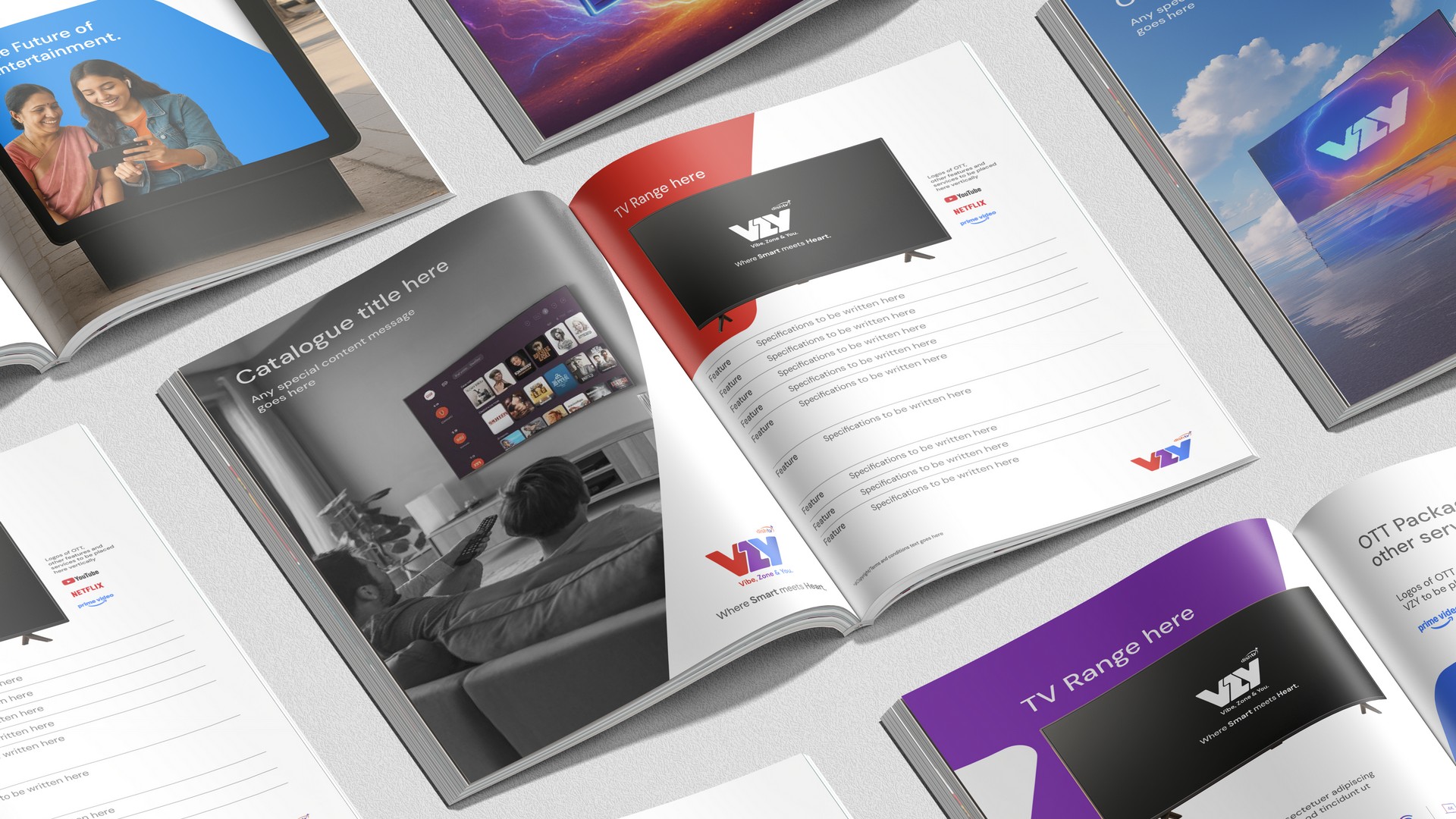
We translated this strategy into the complete brand architecture: positioning, proposition, naming, verbal identity, visual identity, and design system. The architecture established a foundation for future products and services; the design system created reusable principles and components that could extend across multiple applications without repeatedly reinventing the brand. Critically, we designed the brand not only for today’s launch but also for the economics of its growth.
CAC: We reduced decision and explanation friction through a clearer proposition, sharper relevance and a more intuitive brand experience, creating a more efficient path from awareness to understanding to choice. The design mechanism was lower explanation effort → greater decision confidence → improved acquisition efficiency → potential CAC reduction.
CapEx: We built a reusable brand architecture and design system rather than a collection of one-off executions. The core investment could therefore serve multiple products, services, channels and future applications – reducing reinvention and creating greater business capability from each unit of investment.
OpEx: We systemised the brand so that its future application and evolution required less intervention. Reusable components, defined design principles and structured architecture enabled faster deployment, easier adaptation and lower operational dependency – reducing the ongoing cost of managing and evolving the brand.
Scale: We separated what needed to remain consistent from what needed to change. The strategic core and design language remained stable while content, products, services and experiences could evolve around them. One brand platform could therefore support multiple future propositions without proportional increases in complexity or cost.
VZY became more than a new identity for Dish TV – it became a scalable platform for its next phase of connected entertainment. The strength of the engagement lay in treating every design decision as both a brand decision and a business decision, creating a proposition that was easier to choose, a system that was more economical to deploy, and an architecture built to scale.
VZY is an example of how Lokusdesign uses design as a transformation tool: not simply to create brands, but to improve the economics, scalability and business impact of what those brands enable.